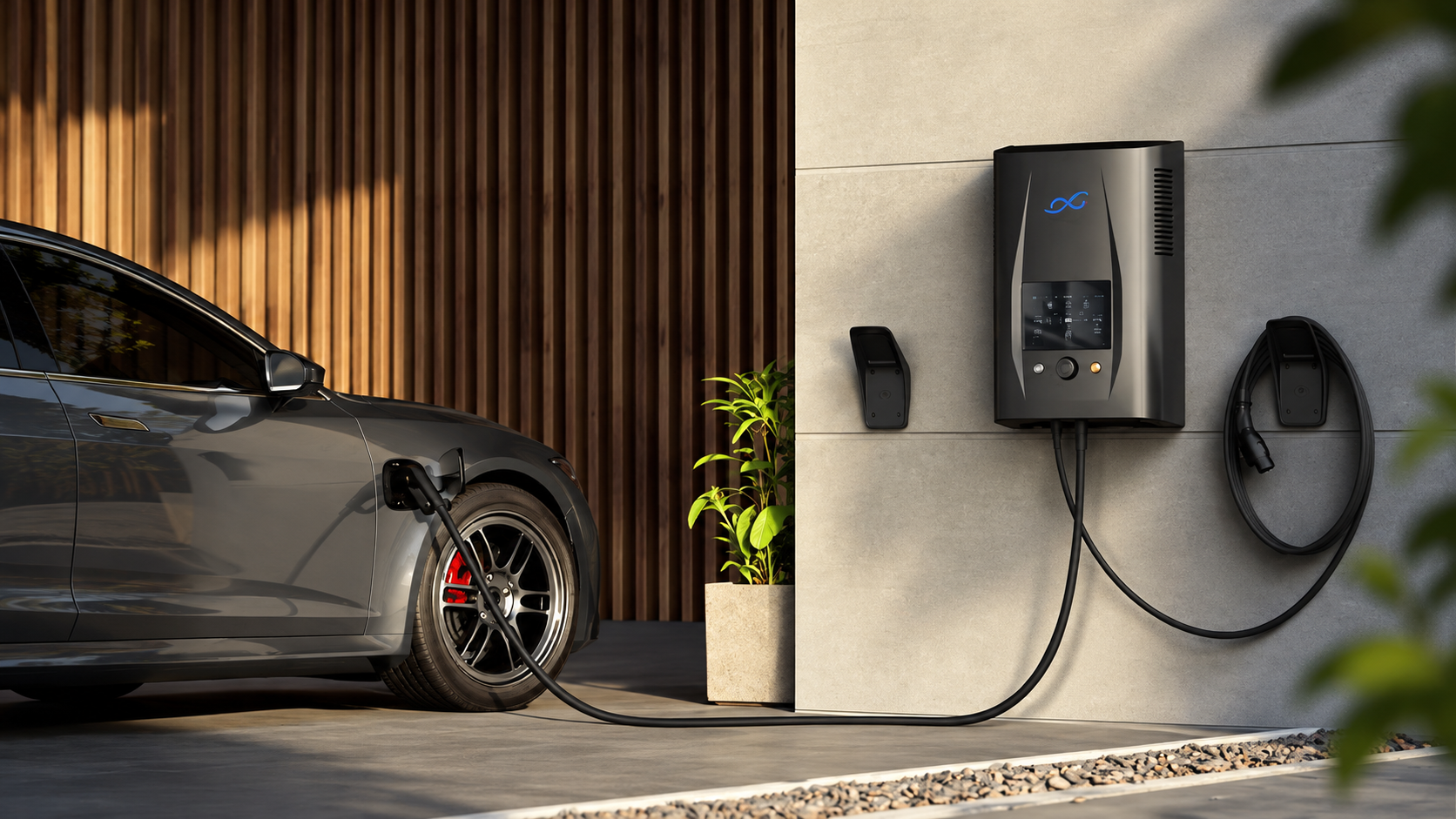
Your Next Home Battery Might Already Be in Your Driveway
Most electric vehicles spend much of their time parked, carrying batteries capable of storing substantial amounts of electricity. Yet in most homes, that energy serves just one purpose: driving.
What if it could also help power the house, store surplus solar energy or reduce demand on the electrical grid?
That's the technology behind dcbel Ara, a home energy station designed to connect electric vehicles, solar generation, stationary batteries and household electricity through one coordinated system.
Its significance extends beyond EV charging. Ara offers a glimpse of homes that can actively manage electricity rather than simply consume it, creating new possibilities for homeowners, utilities and the electrical contractors who install and maintain these systems.
From EV Charging to Two-Way Energy Flow
Conventional EV charging works in one direction. Electricity travels from the grid or home solar system into the vehicle battery.
Bidirectional charging changes that relationship. With compatible technology, electricity can move from the vehicle back into the home.
This introduces two especially useful applications.
Vehicle-to-home (V2H) allows an EV battery to supply electricity to a home's configured electrical circuits. During a power outage, that stored energy can provide backup when the required isolation and control equipment is installed.
Vehicle-to-grid (V2G) allows electricity to flow from a vehicle back into the public grid under an approved utility arrangement. This creates the potential for participating vehicles to help balance electricity demand.
Not every EV supports these functions, even if it can connect to the same charger. Automaker authorization, software, electrical architecture and local utility requirements all matter.
Ara is designed to coordinate this two-way energy flow as part of a broader household energy system.
One System Connecting Solar, Storage and the Home
The more interesting innovation is not any single function. It is how several energy sources can work together.
A traditional home energy installation may contain separate equipment for EV charging, solar power conversion, battery storage, backup switching and energy monitoring.
Ara brings several of those functions into an integrated platform, potentially reducing the need for separate conversion and control devices.
According to dcbel's product documentation, the system is offered in two principal configurations:
Ara Core: Integrates EV charging, home energy management and compatible storage and backup functions.
Ara Core +solar: Adds an integrated solar generation architecture designed to coordinate solar electricity with the home's other energy resources.
Consider a home producing more solar electricity than it needs during the afternoon.
Instead of sending all that surplus electricity to the grid, an appropriately configured system could direct energy toward a connected EV or stationary battery for later use.
As household demand changes, intelligent controls can help determine when to use stored energy and when to draw power from the grid.
This type of coordination is especially relevant as more homes add solar panels, electric heating, battery storage and multiple EVs.
What Happens When the Power Goes Out?
One of Ara's most interesting applications is the potential to use a compatible electric vehicle as a backup power source.
A vehicle battery can contain substantial stored energy, but accessing it safely requires more than plugging the vehicle into a charger.
The electrical system must disconnect from the public grid during an outage, preventing electricity from flowing into lines being serviced by utility crews. Appropriate backup circuits, controls and compatible power equipment are also necessary.
dcbel's energy ecosystem documentation illustrates how Ara works with additional equipment, including backup controls and connected batteries.
How long a home can operate depends on its electrical demand, the battery's available charge and which circuits remain powered.
There is also a practical limitation: the vehicle must be connected and available. If the owner drives away, that source of backup electricity goes with them.
For homes that need continuous backup regardless of where the car is, stationary battery storage may remain an important part of the system.
Why This Technology Matters Beyond the Individual Home
The potential benefits extend beyond convenience during a blackout.
As solar power and electric vehicles become more common, electricity increasingly moves through homes in different directions and at different times.
Intelligent energy systems can help coordinate that activity.
For homeowners, this may mean greater control over how solar electricity is used, when vehicles charge and how stored energy supports household demand.
For electric utilities, connected batteries could eventually become a distributed resource that helps manage periods of high demand.
Instead of relying exclusively on additional centralized generating capacity, qualifying utility programs may be able to draw limited amounts of electricity from participating vehicles.
There are environmental opportunities as well. Better use of locally generated solar electricity and shifting consumption toward cleaner generation periods can potentially reduce emissions.
However, the benefits depend on the electricity source, conversion losses, charging behavior and the wider grid. Shifting power to a cheaper hour does not necessarily make that electricity cleaner.
The underlying development is a more flexible relationship between homes, vehicles and the electricity network.
The Compatibility Challenge
The technology is advancing, but bidirectional charging is not yet universal.
An EV that supports conventional charging may not permit electricity to flow back into a home.
For example, PG&E's vehicle-to-everything program identifies specific vehicle and equipment combinations for participation, including eligible Nissan Leaf, Volvo EX90 and Polestar 3 models paired with Ara.
These represent documented combinations within a particular utility program, not blanket compatibility for every vehicle or geographic market.
Existing home equipment introduces another consideration.
dcbel's published specifications indicate that neither current Ara configuration offers straightforward integration with pre-existing solar equipment. New solar installations are therefore a different proposition from retrofitting homes with established systems.
This is where professional system design becomes essential.
A Growing Role for Electrical and Solar Installers
Technology like Ara also changes the work involved in residential electrical installations.
A conventional EV charger installation may focus on a dedicated circuit, available electrical capacity and safe equipment placement.
An integrated energy system requires a broader understanding of how electricity moves through the property.
Qualified contractors may need to assess:
Electrical service capacity, panel configuration and backup circuit requirements.
EV compatibility and communication between charging equipment and the vehicle.
Solar generation, inverter architecture and stationary battery integration.
Utility interconnection, permitting and required inspections.
System commissioning, monitoring and ongoing technical support.
The installer becomes more than the person mounting equipment and connecting wires. The role increasingly involves designing an energy system around the property and its occupants.
dcbel has established a Smart Home Integration Partner program for qualified industry professionals interested in this technology.
Its installer tutorials cover subjects including electrical integration, backup circuits, system communication, commissioning and remote service.
Program participation and available installation opportunities depend on dcbel's requirements and geographic coverage.
For established electricians, solar businesses and EV charging specialists, developing expertise in integrated energy systems could become a useful extension of existing services.
Where Home Energy Technology Is Heading
dcbel Ara illustrates a broader change in residential energy infrastructure.
The electric vehicle is no longer necessarily just another appliance drawing power from the home. With the right technology, it can become an active part of how that home operates.
Solar panels generate electricity. Batteries store it. Intelligent controls coordinate when and where it moves. Bidirectional charging adds the vehicle to that relationship.
There are still meaningful limitations involving compatibility, installation requirements and utility participation. The technology also needs more publicly documented long-term operating experience.
Even so, Ara represents a practical example of a more connected energy system.
For homeowners, that could mean greater flexibility and resilience. For qualified contractors, it points toward an expanding field of work that combines electrical infrastructure, clean energy and intelligent controls.
The opportunity is not simply to install another charger. It is to help build homes that use energy more intelligently.
Learn more about the system's energy management capabilities, technical architecture and professional installation program.
Explore dcbel AraEditorial Disclosure: Contractor Capital is not affiliated with, sponsored by, or endorsed by dcbel. We independently feature emerging technologies and innovations that we believe may benefit homeowners, businesses, and the contractors who install and service them. This article is provided for informational purposes only.
Frequently Asked Questions
Can any electric vehicle power a home through dcbel Ara?
No. Although Ara supports conventional charging for a broad range of electric vehicles, supplying electricity back to a home requires a specifically compatible vehicle and software configuration. Automaker approval and the appropriate electrical equipment are also necessary. Compatibility should be assessed for the exact vehicle model and year.
Can dcbel Ara work with an existing solar panel installation?
dcbel's current product comparison does not list integration with existing solar systems as a supported feature for either Ara Core or Ara Core +solar. The solar configuration is intended for appropriately designed new installations. Integrating an existing solar system may require a different technical approach, making an experienced solar contractor particularly valuable.
Can a home still have backup electricity when its EV is away?
Yes, if the home has another supported backup source, such as a compatible stationary battery. Vehicle-powered backup depends on the EV remaining connected and having sufficient available energy. A qualified installer can help determine which electrical circuits need protection and how different energy sources can support them.
What skills will electricians need to work with integrated home energy systems?
Beyond ordinary wiring and circuit installation, these projects can require knowledge of solar generation, energy storage, bidirectional charging, electrical load management, backup isolation and system communications. Contractors may also need manufacturer-specific training and commissioning authorization. These capabilities are becoming increasingly relevant as residential electrical systems grow more interconnected.